Sub-Zero sealed system diagnosis and repair
Compressor, evaporator, condenser and refrigerant-side faults, diagnosed with readings before anything is opened.
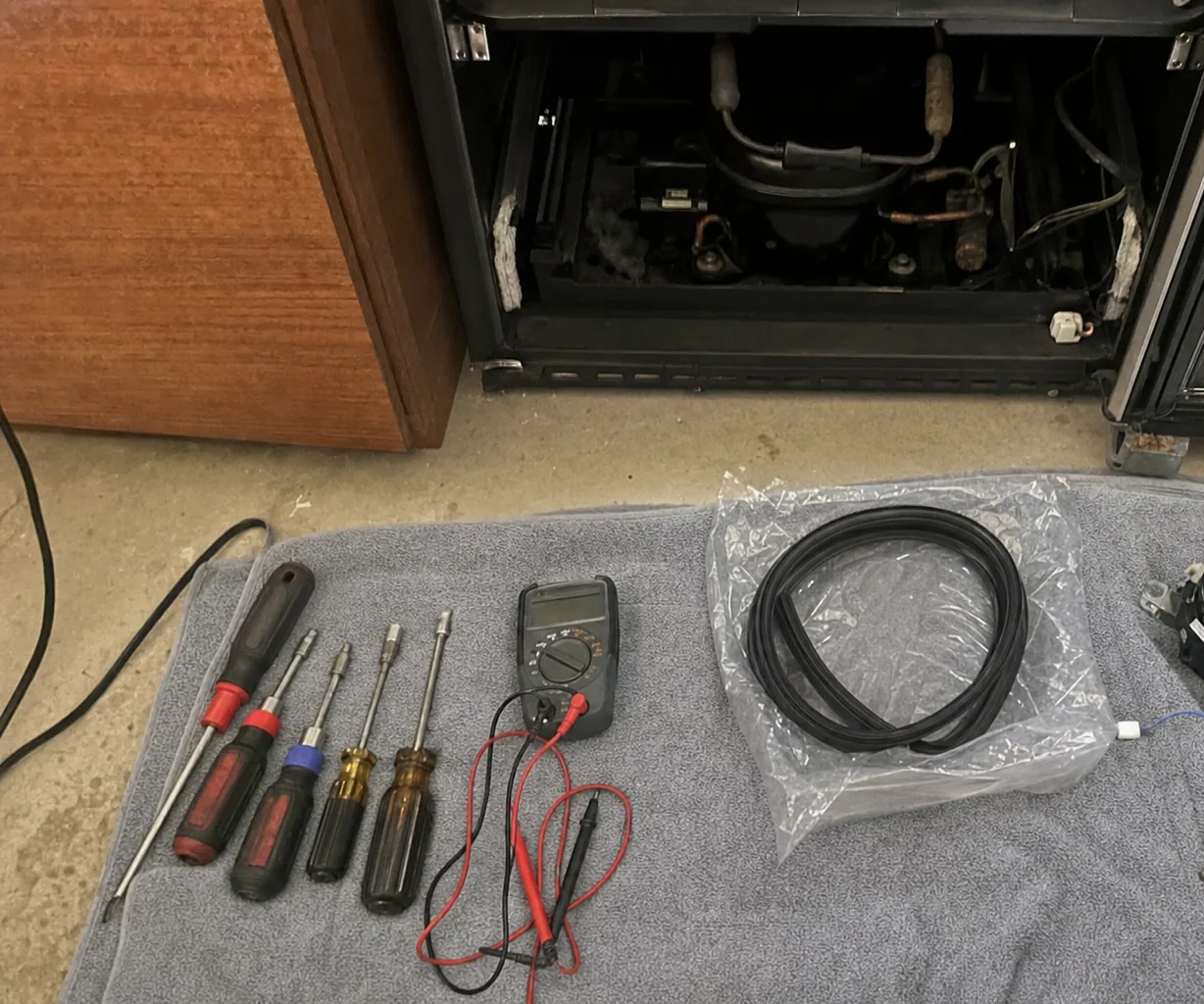
What people call about
- Refrigerator not cooling even though it is running
- Cabinet holds a temperature well above its set point
- Compressor runs continuously without cycling off
- Evaporator frosts unevenly or only in one section
- Frost forms on a suction line inside the compartment
- Cooling recovers for a day after a defrost and then fades
- Oil residue visible near a joint or a fitting
Symptoms, not fault codes. We read the machine in front of us rather than guessing from a list.
The sealed system is the refrigeration circuit itself: compressor, condenser, metering device, evaporator, and the refrigerant moving between them. It is called sealed because it is meant never to be opened. When it has to be, the work is regulated, it requires recovery equipment, and it is the one job in this trade where guessing is genuinely expensive.
We treat it accordingly. Nothing gets opened on a hunch.
Ruling out everything else first
Most cabinets sent to us as “sealed system failures” are not. Before we consider the refrigerant circuit, we eliminate the faults that imitate it:
- A condenser matted with salt film and lint, which on this coast is the single most common cause of a cabinet that cannot make its last few degrees.
- A condenser fan moving less air than its rating because the blade is loaded or the motor is tired.
- Restricted compartment clearance, so the coil is recycling its own exhaust.
- A defrost cycle that is not completing, leaving an evaporator progressively blanketed in ice.
- A door not sealing on its full perimeter, loading the cabinet with humid air around the clock.
- A temperature sensor reporting a number that is not true.
Each of those produces long run times and a warm cabinet, which is exactly the sealed-system presentation. Each is also a fraction of the cost. Working the list in order is not caution for its own sake — it is the difference between a morning’s work and a major repair.
What a real sealed-system fault looks like
Three patterns account for most of what we find.
A refrigerant loss. The circuit charge is small and precise. Lose part of it and the evaporator stops flooding across its full surface, so it frosts at the inlet end and stays bare further along. Frost appearing on a suction line where there should be none is the same story from the other direction. Losses are often slow, which is why the cabinet feels like it has been getting gradually worse for a year.
A restriction. Moisture or debris in the circuit collects at the metering device and chokes flow. The signature is a cabinet that improves noticeably after being off for a while and then fades again as the restriction refreezes. People describe it as “it works after I unplug it overnight.”
A compressor that is no longer pumping. Sometimes electrical, sometimes mechanical. Either way the readings are unambiguous once you have them, and the decision that follows is economic rather than technical.
The corrosion angle on a barrier island
Salt air does not attack refrigerant. It attacks everything holding the circuit together. Condenser tubing, joints, brackets, fasteners and the aluminium fin pack all live in chloride-laden air pulled through the grille at every run cycle, and the leaks we find on the beaches are disproportionately in and around the condenser rather than deep in the cabinet.
That is a useful thing to know before opening anything, and it is why coastal condenser cleaning is a sealed-system conversation as much as a cleaning one. The coil you can reach with a brush is the part of the circuit most likely to be the eventual leak site.
How the work is done
Diagnosis is by measurement: full cycle observation, evaporator frost pattern, condenser inlet and outlet temperatures, compartment ambient, run and off times, electrical readings at the compressor. Leak location uses an electronic detector and, where the geometry demands it, tracer methods — not soap and hope.
If a repair goes ahead, refrigerant is recovered rather than vented, the circuit is evacuated properly to remove moisture before it is charged, and the charge is weighed in. Our technicians are EPA Section 608 certified for refrigerant handling, which is a genuine credential and a legal requirement for this work.
The honest conversation
Sealed-system repair is not always the right answer. On some cabinets, at some ages, with some faults, it is not. We will show you the readings, tell you what the repair costs in writing before anything is ordered, and give you a straight opinion on whether the machine is worth it. We are an independent shop with no sales quota attached to any manufacturer, and Sub-Zero refrigeration is the only thing we work on.
How the visit runs
- Diagnostic, $80 flat. Flat $80 diagnostic. It is credited toward the repair if you go ahead with the work.
- Written finding. What is wrong, what caused it, and what the cabinet will do if it is left alone.
- Written estimate. You get a written estimate before any part is ordered or any labor is billed.
- Repair. Genuine OEM parts, and the condenser cleaned before we leave whether or not it was the fault.
Updated August 15, 2026. See pricing and warranty for the full terms.
What does sealed system diagnosis and repair cost?
Flat $80 diagnostic covering the visit and the full diagnostic sequence, credited toward the repair once you approve the work.
| Work | Typical range |
|---|---|
| Diagnostic visit | $80 flat, credited |
| Compressor or sealed-system repair | $920–$2,380 |
| Evaporator or condenser fan motor | $270–$590 |
| Defrost heater, thermostat or sensor | $240–$610 |
Ranges, not quotes. What a cabinet actually needs is settled by readings taken with the grille off, and the figure you are asked to approve is written down before a part is ordered. The whole table is on the pricing page.
How do you know it is the sealed system and not something cheaper?
- By ruling the cheaper things out first, on readings. Airflow, defrost, door closure and condenser condition account for most cabinets that will not hold temperature, and every one of them is cheaper to put right. Only when those read clean does the refrigerant side become the answer.
Who is allowed to open the refrigerant circuit?
- Technicians who are EPA Section 608 certified for refrigerant handling, which ours are. It is regulated work for a reason: recovery, evacuation and charge are measured operations, and a circuit opened without them turns a repairable cabinet into a replaced one.
Which repair on this page is the expensive one?
- The sealed system itself. It is the top band in the table on this page, and every fault above it on our list — airflow, defrost, a door that will not seal, a loaded condenser — is cheaper to put right. That is the whole reason we work the cheap list first and only then open the refrigerant circuit.
Is a sealed-system repair worth doing on a cabinet this close to the ocean?
- It depends on what the rest of the cabinet looks like. A sound machine behind a sound door is worth the work. A corroded condenser, fasteners blooming and a compressor already drawing hard is a different conversation, and we would rather have it honestly before you spend anything.