What a frost pattern tells you before a gauge does
A field note on using frost distribution to separate door, defrost and refrigerant faults without touching the sealed system.
Published August 15, 2026
Ice inside a cabinet is not one symptom. It is at least four, and where the ice forms separates them before any gauge goes on and long before anything is opened.
This is the cheapest diagnostic in the trade. It costs a torch and five minutes.
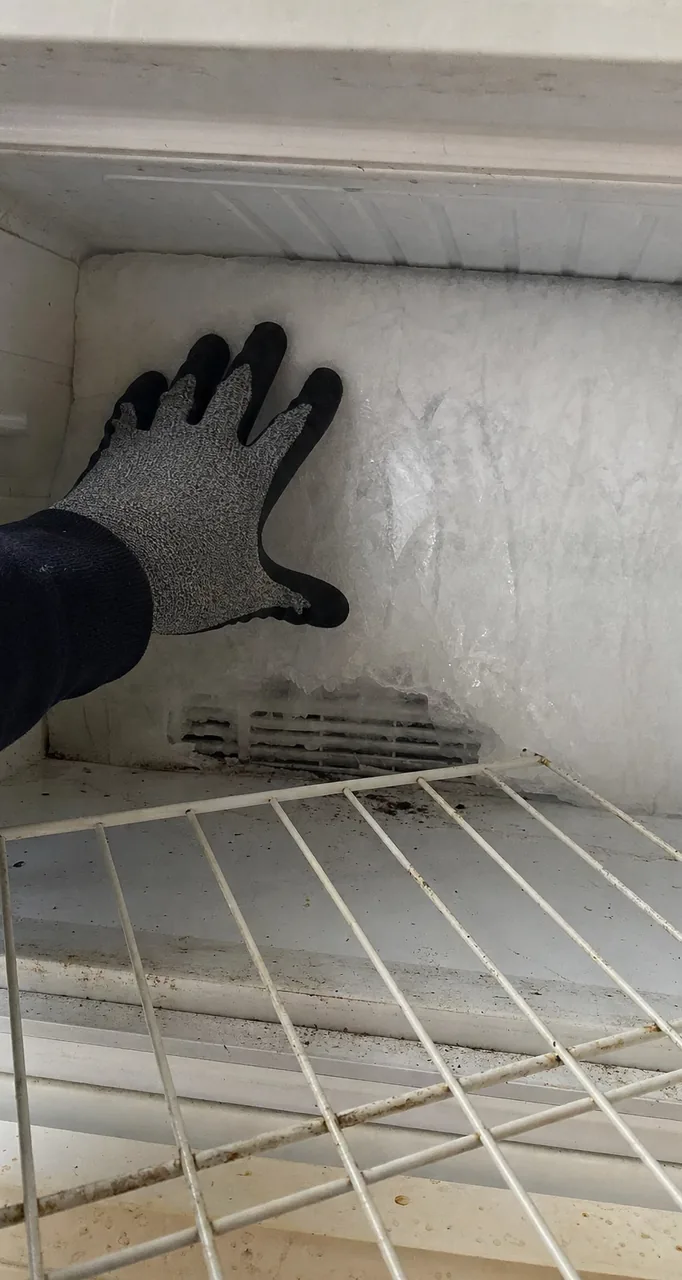
Even frost across the whole evaporator
An evaporator uniformly covered in a light, even coat of frost is doing its job. Refrigerant is flooding the full surface, the whole coil is cold, and moisture in the air is condensing and freezing where you would expect. If the cabinet is also holding its set point, there is nothing wrong here.
Even frost becomes a problem only when it gets thick. A heavy, uniform blanket means moisture is arriving faster than the defrost cycle can clear it, or the defrost cycle is not completing. Either way the coil is progressively insulating itself, the airflow through it drops, and the cabinet warms while the coil stays freezing — the classic contradiction that makes people think the machine is possessed.
Frost at one end of the coil only
This is the pattern worth learning. Refrigerant enters the evaporator at one end and boils off along its length. When the charge is short, it runs out before it reaches the far end. The inlet end frosts. The rest of the coil sits bare and comparatively warm.
A coil frosted at the inlet and clear at the outlet is a refrigerant story, and it is the first pattern that genuinely points at the sealed system rather than at everything that imitates it.
Frost on a suction line where there should be none
Frost creeping back along the suction line, outside the intended cold zone, means liquid refrigerant is getting further than it should. Depending on the system that points at metering, at charge, or at a coil that is not absorbing heat because it is buried in ice.
By itself it is not a diagnosis. In combination with the coil pattern above, it narrows things considerably.
Frost on one side of the cabinet rather than the coil
Now you are not looking at refrigeration at all. Ice concentrated on one wall, one corner, or around one section of gasket means humid room air is being admitted at that point, and the coldest surface nearby is collecting it.
On this island that is nearly always a door. The chain runs like this: hinge hardware takes years of salt-laden air and stiffens; a panelled or glass door carries its weight at the outermost edge; the door begins to hang a fraction low; the gasket seals on three sides and breathes on the fourth. Nobody sees anything wrong, because the door looks shut.
Then the frost tells on it. One-sided frost is a door and hinge inspection, not a refrigeration inspection, and replacing a gasket on a sagging door buys a season at most.
Frost that clears overnight and returns
If a cabinet improves noticeably after being off for a while and then fades again over the following day, the pattern points at a restriction: moisture or debris collecting at the metering device, freezing, choking flow, and thawing while the system is off. Customers describe this one almost word for word — “it works fine if I unplug it overnight.”
Why we do this before opening anything
A sealed system is meant never to be opened. Doing it properly requires recovery, a real evacuation to pull moisture out, and a weighed charge, and it is the one job in refrigeration where a wrong guess is genuinely expensive.
Reading frost first eliminates the cheap causes — a matted coil, a tired condenser fan, a compartment that cannot exhaust, a defrost that is not completing, a door sealing on three sides — every one of which produces long run times and a warm cabinet, which is exactly what a refrigerant loss looks like from the front.
Look at the ice before you reach for the gauges. It has already done half the work.
What does the repair behind this note cost?
Flat $80 diagnostic covering the visit and the full diagnostic sequence, credited toward the repair once you approve the work.
| Work | Typical range |
|---|---|
| Diagnostic visit | $80 flat, credited |
| Compressor or sealed-system repair | $920–$2,380 |
| Defrost heater, thermostat or sensor | $240–$610 |
Ranges, not quotes. What a cabinet actually needs is settled by readings taken with the grille off, and the figure you are asked to approve is written down before a part is ordered. The whole table is on the pricing page.
Can a frost pattern really replace a gauge?
- It cannot replace one, but it decides whether reaching for one is justified. Even frost, frost at one end, frost on a suction line and frost on a cabinet wall point at four different faults, and three of them are cheaper than the fourth.
Why not just open the system and look?
- Because opening a sealed system is irreversible, regulated work, and most cabinets that will not hold temperature never needed it. Reading the frost first is how a defrost sensor or a door seal gets found before anyone connects a set of gauges.