Sub-Zero integrated column refrigerator and freezer repair
Service for integrated column refrigerators and freezers, where the cabinet is panelled into the joinery and airflow is the first thing to check.
What people call about
- One column holds temperature, the paired column does not
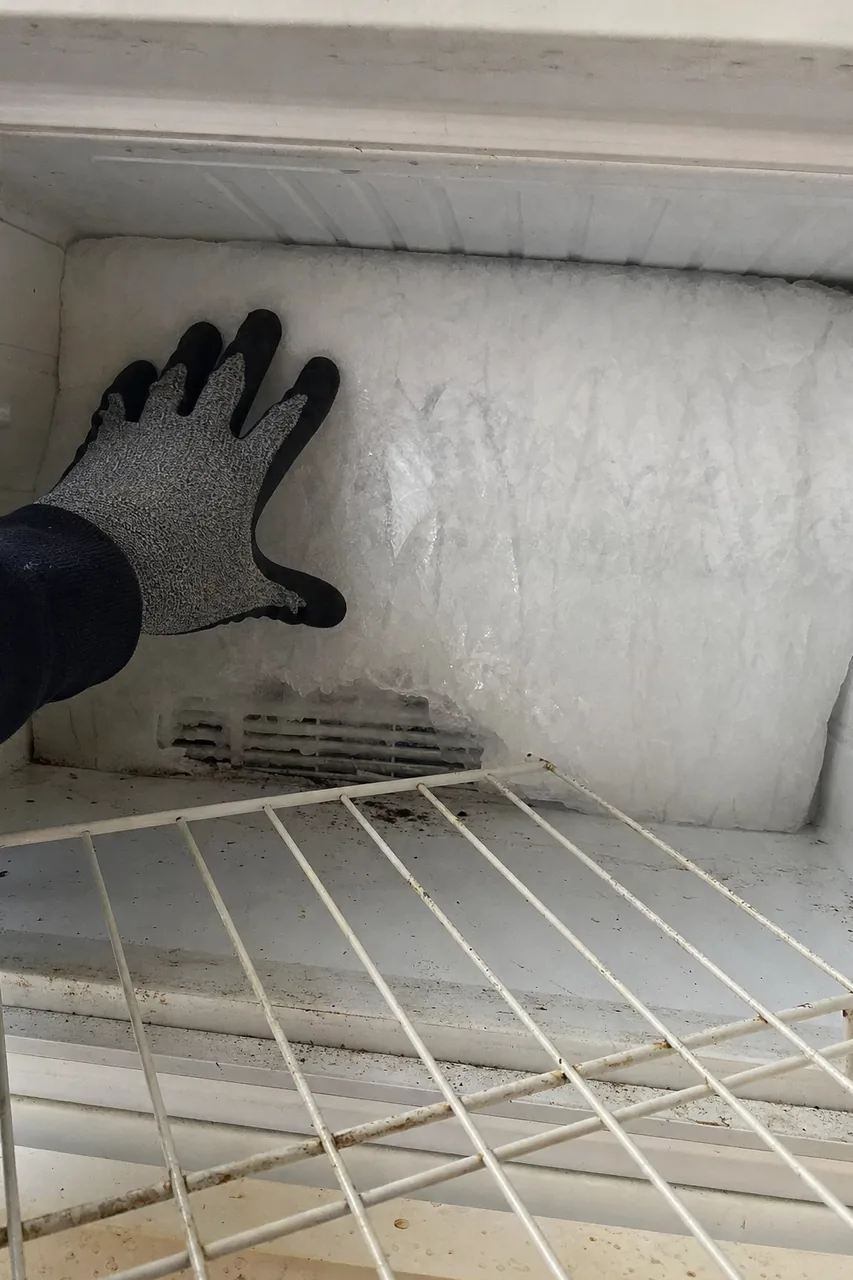
- Ice building on the back wall of the freezer column
- Panelled door drifts out of alignment with its neighbour
- Drawer runners bind or drop when loaded
- Fan noise rises and falls with the door closed
- Alarm sounds after a long door-open period and will not clear
Symptoms, not fault codes. We read the machine in front of us rather than guessing from a list.
A column is a single-purpose cabinet: all refrigerator or all freezer, full height, panel-ready so it disappears into the joinery. On this island they turn up most often in the newer builds and in kitchens that were taken back to the studs, usually as a matched pair flanking a run of cabinetry.
Each column carries its own refrigeration system. That matters when you are diagnosing, because a pair that looks like one appliance is two appliances sharing a face frame. If the refrigerator column is warm and the freezer column next to it is fine, you have not learned anything about the freezer. You have learned that the fault is inside one cabinet and not in the house.
Airflow is the first suspect, not the last
An integrated column is built into a tight opening with a defined clearance for intake and exhaust. Cabinetmakers and homeowners both close that clearance over time without meaning to. A toe kick gets rebuilt a half inch deeper. A run of trim gets added. Somebody stores a case of water in front of the grille. In a beach house with a compact kitchen, the clearance is often the first thing sacrificed to fit.
Once the compartment cannot exhaust, the condenser is breathing its own hot air. Head pressure climbs, run time climbs, and the cabinet slowly loses the last few degrees. The complaint that arrives is “it is not as cold as it was,” which sounds like a sealed-system problem and frequently is not.
We measure clearance and exhaust temperature before we open anything else, because if the opening is wrong every other reading is contaminated.
Frost on the back wall of a freezer column
A freezer column that grows ice on the rear wall is telling you moisture is getting in faster than the defrost cycle can clear it. There are only a few ways that happens: a door that is not sealing on its full perimeter, a defrost cycle that is not completing, or a drain path that is refreezing before the water leaves the cabinet.
Panelled doors complicate the first one. A custom panel adds weight at the outermost edge of the door, which is the worst place to add it. Over years, on hinges that live in salt-laden air, that weight shows up as a door that hangs a fraction low and seals along three sides instead of four. The tell is frost concentrated on one side of the cabinet rather than evenly across the back.
We check hinge hardware for corrosion and play, then closure, then gasket set, then the defrost path. In that order, because replacing a gasket on a sagging door buys you a season at most.
Drawers, runners and salt
The refrigerator column’s interior drawers ride on runners that are engineered for a specific load and a specific alignment. In a house a few hundred yards from the water, the failure mode is not wear so much as corrosion at the rolling surfaces and fasteners. A runner that binds gets forced, a forced runner drops, and a dropped drawer is then holding the door open a millimetre at the bottom without anybody noticing.
That is the loop we look for on the beaches: a corrosion problem presenting as a temperature problem two steps downstream.
Alarms that will not clear
Long door-open alarms exist because the cabinet cannot cool a room. After a party, a grocery run or a power event, the alarm is doing its job and it clears once the cabinet recovers. An alarm that will not clear after several hours of closed-door running is different: either the cabinet genuinely is not recovering, or the sensor reporting the temperature is wrong.
Those two look identical from the front panel and completely different on a meter. We check the sensor against an independent probe in the same air before we touch a control board, because a good board acting on a bad reading behaves exactly like a bad board.
What you get from us
A written finding, a written estimate, genuine OEM parts, and a straight answer about whether the cabinet is worth the repair. We are an independent shop and we service Sub-Zero refrigeration only, so the person who arrives has seen this cabinet family before rather than working from a manual on a phone.
How the visit runs
- Diagnostic, $80 flat. Flat $80 diagnostic. It is credited toward the repair if you go ahead with the work.
- Written finding. What is wrong, what caused it, and what the cabinet will do if it is left alone.
- Written estimate. You get a written estimate before any part is ordered or any labor is billed.
- Repair. Genuine OEM parts, and the condenser cleaned before we leave whether or not it was the fault.
Updated August 15, 2026. See pricing and warranty for the full terms.
What does integrated column refrigerator and freezer repair cost?
Flat $80 diagnostic covering the visit and the full diagnostic sequence, credited toward the repair once you approve the work.
| Work | Typical range |
|---|---|
| Diagnostic visit | $80 flat, credited |
| Defrost heater, thermostat or sensor | $240–$610 |
| Evaporator or condenser fan motor | $270–$590 |
| Compressor or sealed-system repair | $920–$2,380 |
| Electronic control board | $430–$790 |
Ranges, not quotes. What a cabinet actually needs is settled by readings taken with the grille off, and the figure you are asked to approve is written down before a part is ordered. The whole table is on the pricing page.
Why does one column hold temperature when the one beside it does not?
- Because they are two cabinets sharing joinery, not one appliance. Each column runs its own sealed system, its own fan and its own defrost, so a fault in one says nothing about the other. We diagnose the failing column on its own readings and leave the healthy one alone.
What causes ice to build on the back wall of a freezer column?
- Either the defrost cycle is not terminating properly, or humid air is getting in past a door that no longer closes square. The pattern tells us which: defrost frost builds evenly over days, while door frost gathers nearest the leak and clears unevenly.
Can a panelled door that has drifted out of line be reset?
- Often, yes. Panel-ready doors carry real weight at the outer edge of the swing, and hinge hardware carrying that weight in salt air stiffens years before it breaks. We adjust the hinge and the closure, and we say plainly when the opening itself has moved and the work belongs to a cabinetmaker.